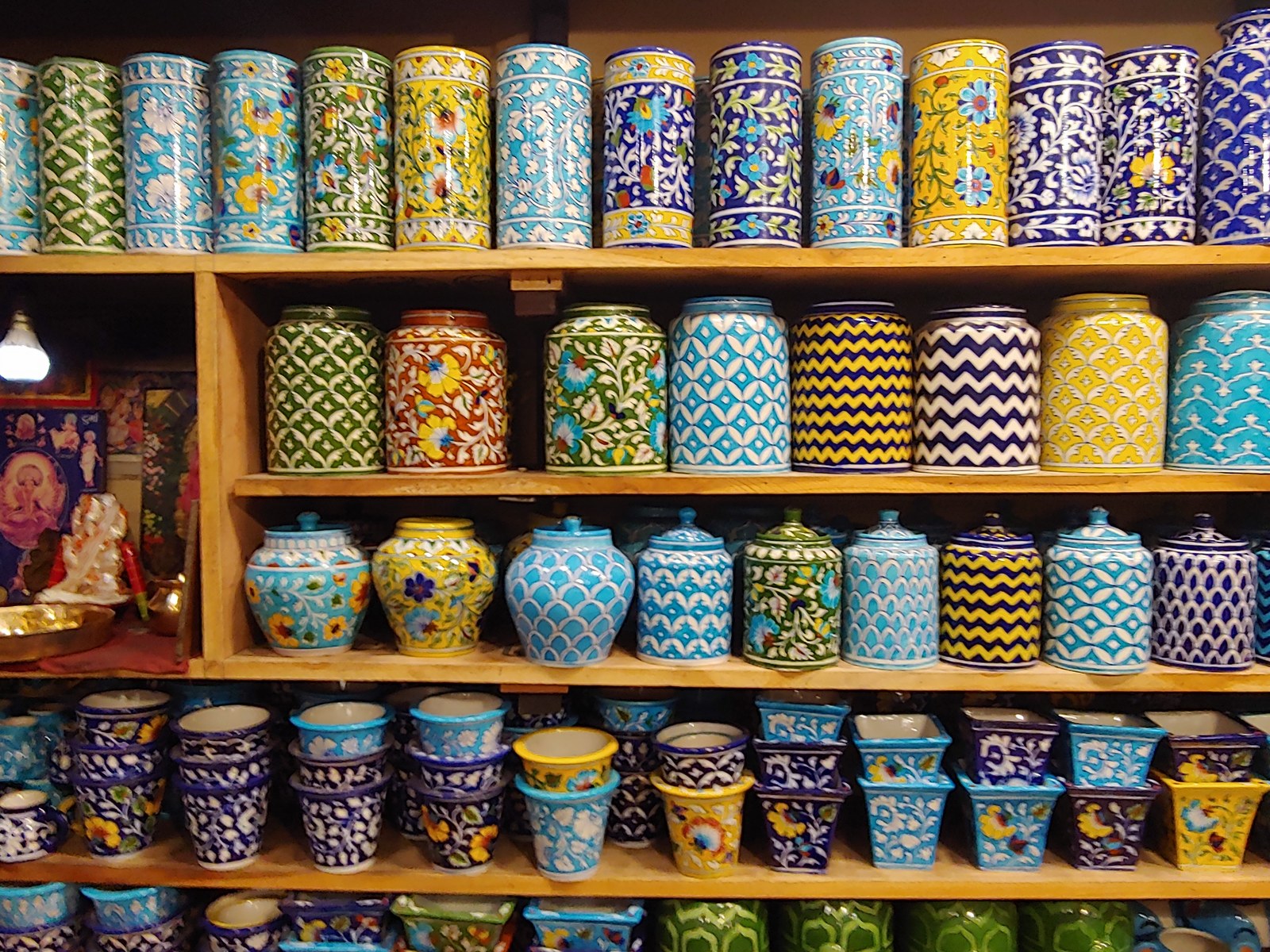
Photo: Atcelsius / Wikimedia Commons, CC BY-SA 4.0

Jaipur Blue Pottery
Quartz-bodied, cobalt-glazed pottery that contains no clay at all — a Persian technique perfected in the pink city.
| GI number | GI-57 |
|---|---|
| Registered | |
| Goods class | 21 |
| Typical price | ₹150 - ₹10,000 |
| Proprietor | Jaipur Blue Pottery artisans |
| State | Rajasthan |
The story
Jaipur's blue pottery is a beautiful contradiction: pottery without clay. The dough is ground quartz, glass and multani mitti, shaped in moulds and fired only once. The technique travelled from Persia via Mughal workshops and was revived from near-extinction in the 1960s by artist Kripal Singh Shekhawat. The luminous cobalt and turquoise palette gives Jaipur homes their signature doorknobs, tiles and vases.
How it is made
- Quartz stone powder, glass and gum are kneaded into a non-clay dough.
- Pressed into moulds; surfaces smoothed by hand.
- Painted with cobalt oxide (blue) and copper oxide (turquoise).
- Glazed and fired once at low temperature — the step where most pieces are lost.
◈ How to identify the authentic Jaipur Blue Pottery
What to check
- Body is white quartz, visible at any chip — never red/brown clay.
- Palette anchored in cobalt blue and turquoise with floral/animal motifs.
- Slightly translucent glaze with tiny imperfections from single firing.
- GI-tagged studios in Jaipur; beware clay-bodied copies from elsewhere.
Glazed doughless pottery made from quartz powder. True pieces are slightly semi-translucent; fake clay pottery is opaque and heavy.
Price to expect
Genuine Jaipur Blue Pottery typically sells in the range of ₹150 - ₹10,000. Prices far below that range are a common sign of an imitation.
Where to buy
Look for authorised sellers such as Jaipur Blue Pottery Artisans Association, or government emporia and cooperatives in Rajasthan.
Registry record
Registry record: GI-57 · Registered 2008 · Proprietor: Jaipur Blue Pottery artisans
Region and market
Jaipur's blue pottery is made in small studios, many clustered around the city, and the craft was revived in the twentieth century with support from artists and the state government. Products range from tiles and plates to lamp bases, door knobs and ornamental vases. The vivid blue and turquoise glazes have made it a visual symbol of Jaipur, and it is frequently used in hotels and restaurants for decor.
Buying guide
Look at a chipped edge or the base: real blue pottery reveals a white, sandy body, not red or brown clay. The painting should show small hand variations, and the glaze should be glossy but not perfectly uniform. Buy from Jaipur studios and government emporia, and handle carefully, as the ware is fragile. Avoid using decorative pieces for food unless the maker confirms they are food-safe.
Frequently asked questions
What is the GI registration number of Jaipur Blue Pottery?
This catalogue lists Jaipur Blue Pottery as GI-57. Registration numbers should be confirmed against the official GI Journal before commercial use.
Where is Jaipur Blue Pottery made?
Jaipur Blue Pottery is produced in Rajasthan, in the handicrafts category of this catalogue.
Can Jaipur Blue Pottery legally be made outside Rajasthan?
No. GI protection means only producers within the notified region of Rajasthan may legally sell goods under the name “Jaipur Blue Pottery”.
What does genuine Jaipur Blue Pottery cost?
Genuine Jaipur Blue Pottery typically sells in the range of ₹150 - ₹10,000. Prices far below this range are a common sign of an imitation.
How can I spot a fake Jaipur Blue Pottery?
Glazed doughless pottery made from quartz powder. True pieces are slightly semi-translucent; fake clay pottery is opaque and heavy.
Where should I buy genuine Jaipur Blue Pottery?
Look for authorised sellers such as Jaipur Blue Pottery Artisans Association, or government emporia and cooperatives in Rajasthan.
From Rajasthan and the handicrafts family
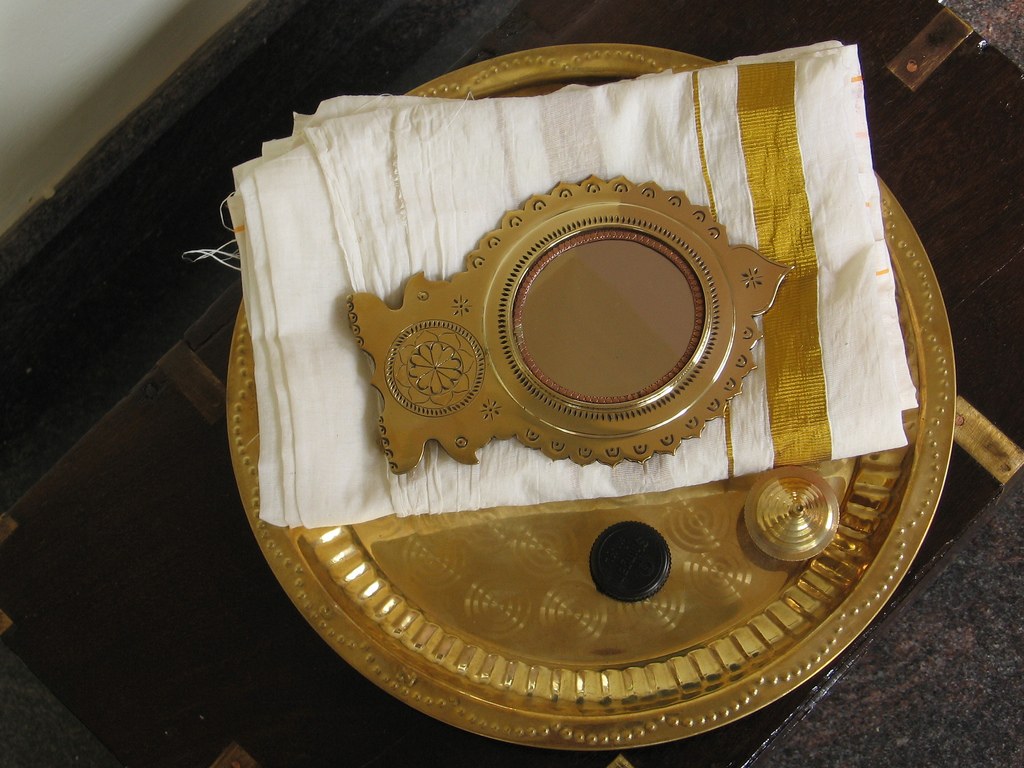 Photo: Rajesh Nair from Bangalore, India / CC BY-SA
Aranmula Kannadi
Kerala · ₹3,000 - ₹1,50,000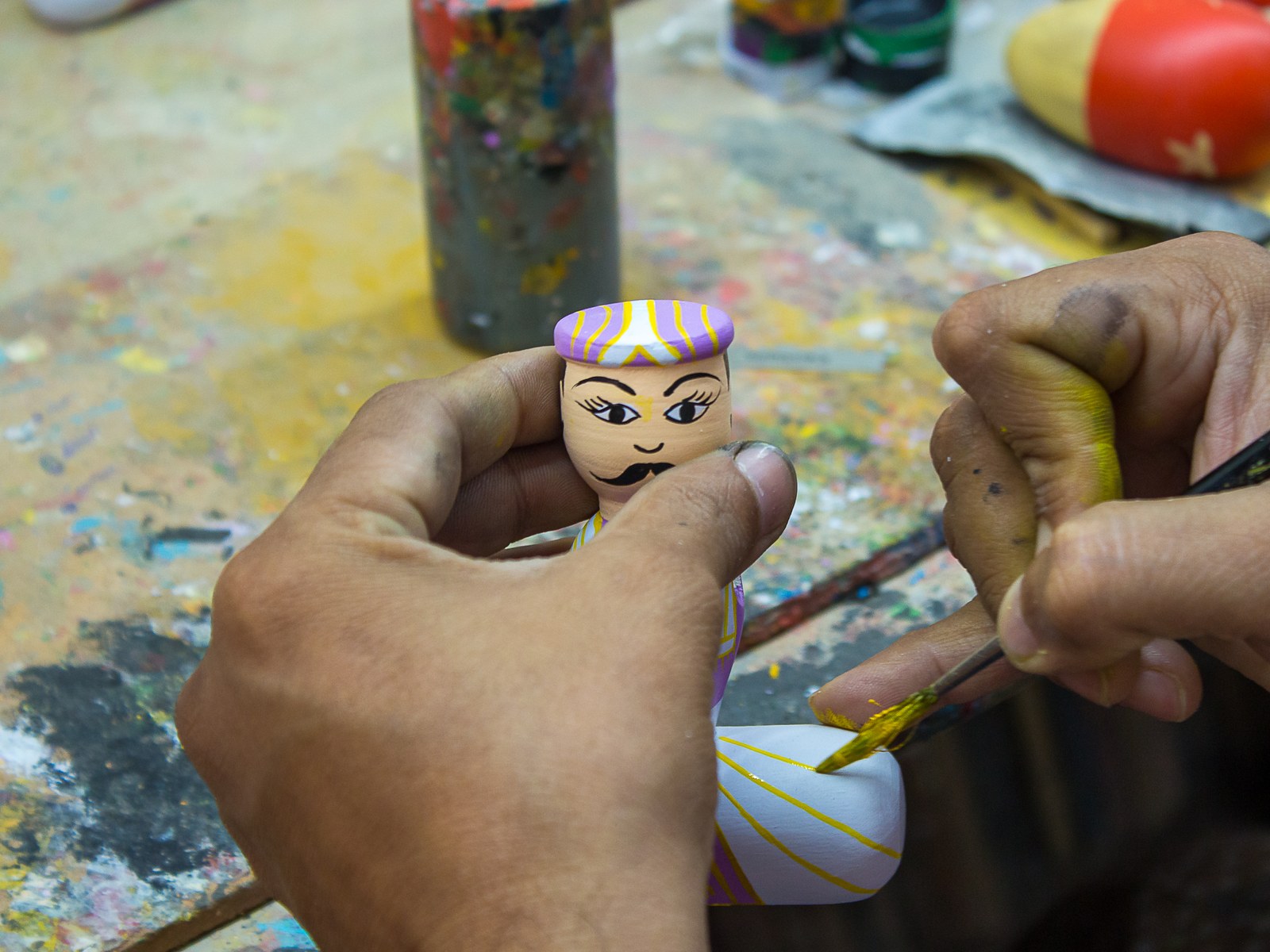 Photo: MaximusPrasad / CC BY-SA
Channapatna Toys
Karnataka · ₹150 - ₹3,000
Madhubani Painting
Bihar · ₹500 - ₹50,000