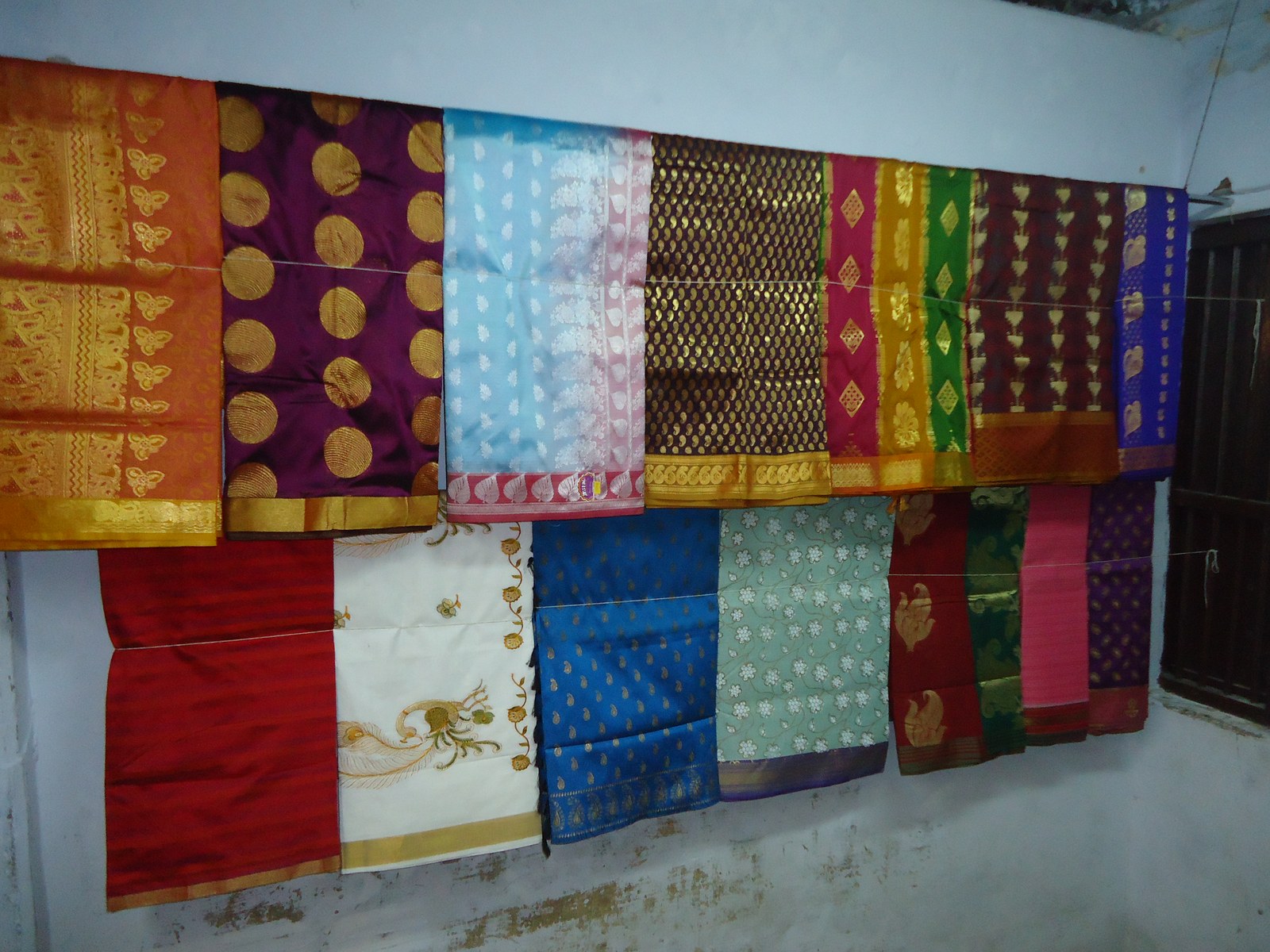
Photo: రహ్మానుద్దీన్ / Wikimedia Commons, CC BY-SA 3.0

Kanchipuram Silk Saree
Temple-town silk where border and body are woven separately and joined so they can never be torn apart.
| GI number | GI-8 |
|---|---|
| Registered | |
| Goods class | 24, 25 |
| Typical price | ₹8,000 - ₹3,00,000 |
| Proprietor | Dept. of Handlooms & Textiles, TN |
| State | Tamil Nadu |
The story
In Kanchipuram, the city of a thousand temples, sarees are woven the way gopurams are built: heavy, architectural, made to outlast generations. The korvai technique weaves the contrast border and body as separate warps interlocked so firmly that, as weavers say, the saree may tear but the joint never will. Three-ply mulberry silk and real zari make a genuine Kanchipuram noticeably heavy — 750 grams to a kilogram.
How it is made
- Three silk threads twisted together with silver zari for strength.
- Body and border dyed separately in contrasting colours.
- Korvai: two or three weavers interlock border warp with body weft.
- Pitni technique joins the contrasting pallu to the body.
- Motifs: temple spires, checks (kattam), peacocks, rudraksham.
◈ How to identify the authentic Kanchipuram Silk Saree
What to check
- Contrast border joined by korvai — check the zigzag interlock line.
- Weight: genuine pieces are 750g+; light 'Kanchipurams' are imposters.
- Zari tested by rubbing: real zari reveals red silk core, not white plastic.
- Silk Mark + GI label from registered weaver societies.
Real Kanchipuram features contrasting borders woven separately (Korvai) and attached seamlessly. A thread burn yields true ash and organic aroma.
Price to expect
Genuine Kanchipuram Silk Saree typically sells in the range of ₹8,000 - ₹3,00,000. Prices far below that range are a common sign of an imitation.
Where to buy
Look for authorised sellers such as Kancheepuram Murugan Silk Weavers Cooperative, or government emporia and cooperatives in Tamil Nadu.
Registry record
Registry record: GI-8 · Registered 2005 · Proprietor: Dept. of Handlooms & Textiles, TN
Region and market
Kanchipuram silk saris are woven in the temple town of Kanchipuram and neighbouring villages, where weaver families have practised the craft for generations. The town's silk is mulberry, and the zari traditionally involves silver thread with a thin gold coating. Bright contrast borders, temple motifs and bold checks are typical, and Kanchipuram saris are a staple of South Indian weddings, often bought as long-term investments.
Buying guide
Ask about the silk and zari content and look for the Silk Mark and the GI tag issued for registered weavers. Test that the border and body are interlocked, not stitched together, and compare the weight with other pieces, since real Kanchipuram silk is heavy. A rubbed zari thread that reveals a red silk core is a good sign. Buy from weavers' societies such as Co-optex or reputable showrooms.
Frequently asked questions
What is the GI registration number of Kanchipuram Silk Saree?
This catalogue lists Kanchipuram Silk Saree as GI-8. Registration numbers should be confirmed against the official GI Journal before commercial use.
Where is Kanchipuram Silk Saree made?
Kanchipuram Silk Saree is produced in Tamil Nadu, in the textiles category of this catalogue.
Can Kanchipuram Silk Saree legally be made outside Tamil Nadu?
No. GI protection means only producers within the notified region of Tamil Nadu may legally sell goods under the name “Kanchipuram Silk Saree”.
What does genuine Kanchipuram Silk Saree cost?
Genuine Kanchipuram Silk Saree typically sells in the range of ₹8,000 - ₹3,00,000. Prices far below this range are a common sign of an imitation.
How can I spot a fake Kanchipuram Silk Saree?
Real Kanchipuram features contrasting borders woven separately (Korvai) and attached seamlessly. A thread burn yields true ash and organic aroma.
Where should I buy genuine Kanchipuram Silk Saree?
Look for authorised sellers such as Kancheepuram Murugan Silk Weavers Cooperative, or government emporia and cooperatives in Tamil Nadu.
From Tamil Nadu and the textiles family
Woraiyur Cotton Sari
Tamil Nadu Photo: Daderot / CC BY-SA
Banarasi Saree
Uttar Pradesh · ₹5,000 - ₹2,00,000
Bhagalpur Silk (Tussar)
Bihar Photo: Bijay Chaurasia / CC BY-SA