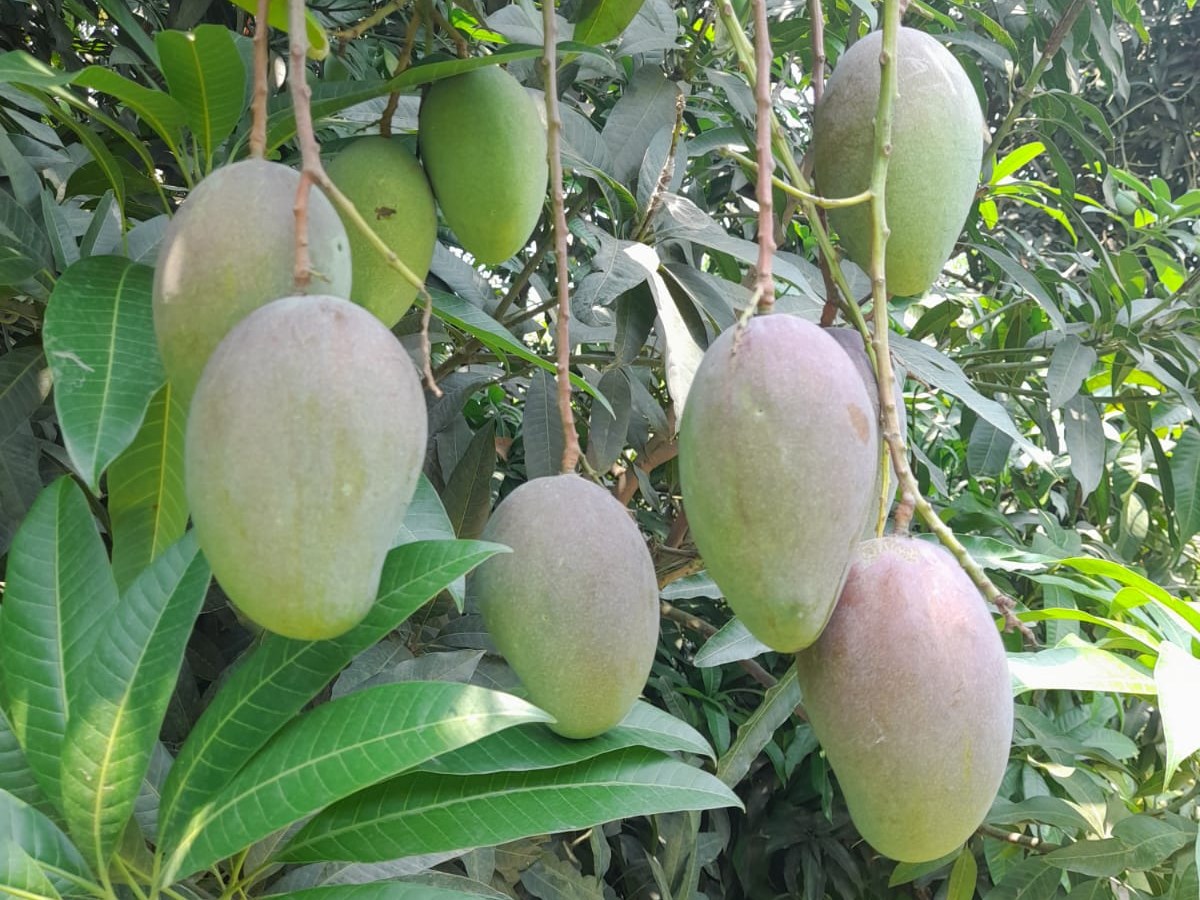
Photo: Nazimullah Kaleemullah Khan / Wikimedia Commons, CC0

Malihabadi Dusseheri Mango
| GI number | GI-4 |
|---|---|
| Typical price | ₹80 - ₹200 per kg |
| Verified cooperatives | Malihabad Mango Growers Cooperative |
| State | Uttar Pradesh |
About Malihabadi Dusseheri Mango
Malihabad Dussehri is a mango grown around Malihabad, a fruit belt near Lucknow in Uttar Pradesh. The fruit is elongated with a slightly pointed tip, turns greenish-yellow when ripe and has a very sweet, aromatic pulp with comparatively little fibre. It arrives after the earliest varieties, usually from June into July, and is a favourite for eating fresh as well as for shakes and desserts across north India.
Heritage and place
The variety is named for Dasheri village near Kakori, and Malihabad's orchards, some of them very old and closely associated with the region's Nawabi past, made it famous. The soil and hot, dry summers of the Lucknow belt give the fruit its concentrated sweetness. A GI protects the name so that Dussehri mangoes grown far from Malihabad are not sold as the Lucknow original.
How it is made
Trees are mostly grown from grafted stock in large orchards, and fruit is harvested by hand at maturity, often with a short stalk left on to reduce sap burn. Traders then ripen the fruit, traditionally in beds of paddy straw over several days. Ripening with calcium carbide is illegal because of health risks, so the way a mango is ripened matters as much as where it was grown.
Registry record
Malihabadi Dusseheri Mango is listed in this catalogue as GI-4, a Geographical Indication tagged product of Uttar Pradesh in the agricultural category. The name is legally protected: only producers within the notified region may sell under it. Confirm the entry in the official GI Journal before relying on it commercially.
◈ How to spot a fake Malihabadi Dusseheri Mango
What to check
Buy in season and be sceptical of Dussehri offered very early or very late. Ripe fruit smells sweet at the stalk end and gives slightly under gentle pressure, with an evenly yellow-green skin rather than patchy colouring. Fruit that is unusually uniform and hard yet coloured may have been artificially ripened. Buy from orchard-linked sellers or trusted fruit merchants, wash before eating, and ask where the crate was packed.
- Features an elongated shape with a uniquely sweet, fiberless pulp and distinct rich aroma lacking any synthetic carbide aftertaste.
Price to expect
Genuine Malihabadi Dusseheri Mango typically sells in the range of ₹80 - ₹200 per kg. Prices far below that range are a common sign of an imitation.
Where to buy
Look for authorised sellers such as Malihabad Mango Growers Cooperative, or government emporia and cooperatives in Uttar Pradesh.
Catalogue record
Catalogue record: GI-4 · Uttar Pradesh · reviewed
Frequently asked questions
What is the GI registration number of Malihabadi Dusseheri Mango?
This catalogue lists Malihabadi Dusseheri Mango as GI-4. Registration numbers should be confirmed against the official GI Journal before commercial use.
Where is Malihabadi Dusseheri Mango made?
Malihabadi Dusseheri Mango is produced in Uttar Pradesh, in the agricultural category of this catalogue.
Can Malihabadi Dusseheri Mango legally be made outside Uttar Pradesh?
No. GI protection means only producers within the notified region of Uttar Pradesh may legally sell goods under the name “Malihabadi Dusseheri Mango”.
What does genuine Malihabadi Dusseheri Mango cost?
Genuine Malihabadi Dusseheri Mango typically sells in the range of ₹80 - ₹200 per kg. Prices far below this range are a common sign of an imitation.
How can I spot a fake Malihabadi Dusseheri Mango?
Features an elongated shape with a uniquely sweet, fiberless pulp and distinct rich aroma lacking any synthetic carbide aftertaste.
Where should I buy genuine Malihabadi Dusseheri Mango?
Look for authorised sellers such as Malihabad Mango Growers Cooperative, or government emporia and cooperatives in Uttar Pradesh.
From Uttar Pradesh and the agricultural family
 Photo: Biswarup Ganguly / CC BY-SA
Basmati Rice
Uttar Pradesh
Alphonso Mango
Maharashtra · ₹500 - ₹1,500/dozen Photo: Daderot / CC BY-SA
Banarasi Saree
Uttar Pradesh · ₹5,000 - ₹2,00,000 Photo: Dcrjsr / CC BY-SA